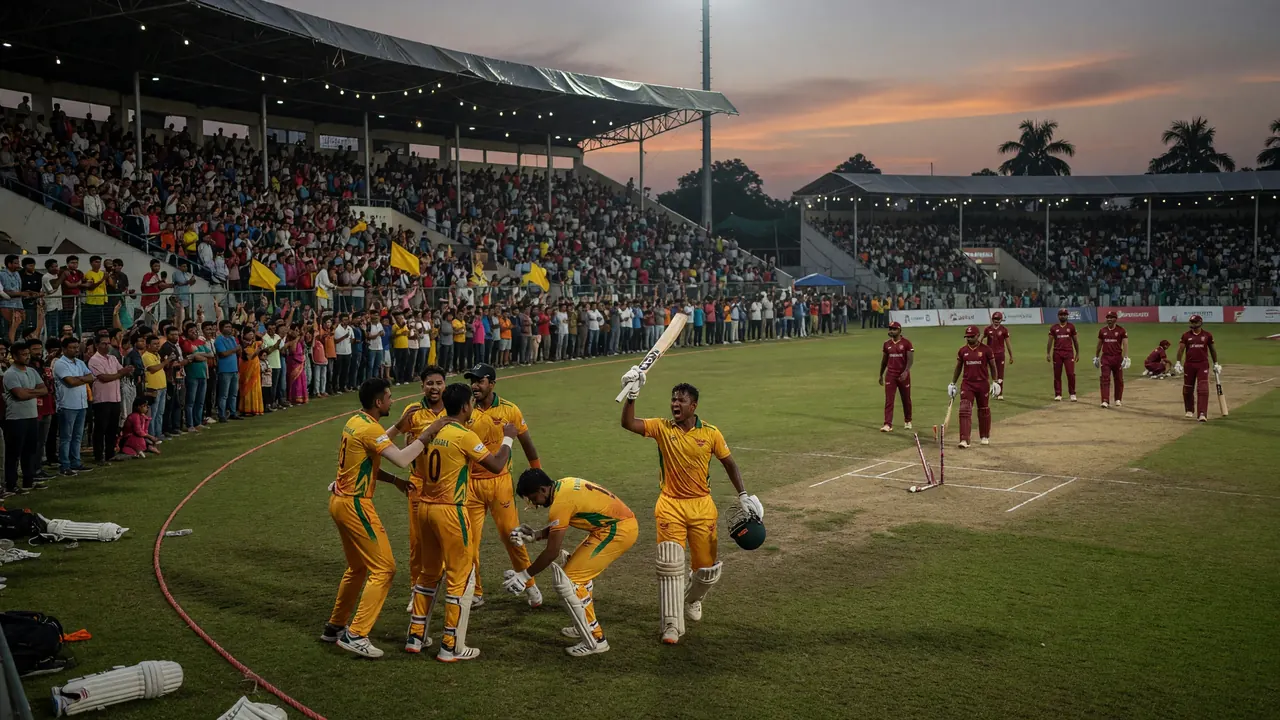
Charaideo Sunrisers began the inaugural Imperial Blue Packaged Drinking Water Assam Premier League with a four-wicket win over Barpeta Braves at the Assam Cricket Association Stadium in Guwahati on Saturday, 1 August 2026. Asked to chase 157 after putting Barpeta in, Charaideo reached the target with five balls remaining, carried by an unbeaten 68 from opener Pradyun Saikia.
Saikia’s innings was the first half-century of the new league. He faced 46 balls, struck five fours and three sixes, and stayed through a collapse that left his side 76 for five after 14 overs. The final stretch required 81 from six overs. Amlan Jyoti Das (34 off 22) and Mayukh Hazarika (17 not out off 8) supplied the acceleration around him.
Barpeta’s early stumble and middle recovery
Barpeta Braves lost their shape inside the powerplay. Kabir Hassan Desmukh managed only 9 off 7 before falling, and captain Denish Das was dismissed for a three-ball duck. Saurav Mousum Dihingia tried to force the pace with 28 off 22, including three fours and two sixes, but Himanshu Saraswat removed him and Das in quick succession. At 42 for three inside six overs, Barpeta needed a rebuild rather than a free hit.
Abhilash Maurya provided that rebuild. His 43 off 31 was the top score of the innings and the platform for a 64-run stand with wicketkeeper-batter Gaurav Thakuria, who made 25 off 27. The partnership moved Barpeta out of immediate danger and into a range from which a competitive total remained possible on a Guwahati surface that rewarded clean striking once the ball was older.
When Maurya and Thakuria departed, Arun Sonar finished the innings with the sharpest acceleration of the night. Unbeaten on 37 off 19 with two fours and three sixes, he added an unbroken 50 with Bikiran Das (12 not out). Barpeta closed on 156 for five from 20 overs — short of a fortress total, but enough to put pressure on a chase that still needed composure through the middle overs.
How the bowling figures broke down
Himanshu Saraswat led Charaideo’s attack with 2 for 25, the only multiple-wicket return of the innings and the spell that turned Barpeta’s powerplay into a recovery job. Abinash Phukan took 1 for 42. On the Barpeta side later, five bowlers shared the five Charaideo wickets: Shubham Kumar Gupta (1/15), Saifikul Islam (1/36), Bikiran Das (1/31), Kunal Sarma (1/29) and Abhilash Maurya (1/8). No single bowler dominated the chase; the pressure came from regular breakthroughs rather than one long spell.
| Team | Score | Top contributions | Best bowling |
|---|---|---|---|
| Barpeta Braves | 156/5 (20) | Maurya 43, Sonar 37*, Dihingia 28 | Saraswat 2/25 |
| Charaideo Sunrisers | 157/6 (19.1) | Saikia 68*, A. J. Das 34, Hazarika 17* | Maurya 1/8, Gupta 1/15 |
Brief scores, as reported after the match: Barpeta Braves 156/5 in 20 overs (Abhilash Maurya 43, Arun Sonar 37*, Saurav Mousum Dihingia 28; Himanshu Saraswat 2/25, Abinash Phukan 1/42). Charaideo finished the chase in 19.1 overs for the loss of six wickets.
Saikia’s hold on a fraying chase
Charaideo’s batting card after the toss looked straightforward on paper: bat through the middle, keep wickets for the last five, and use the depth if the required rate climbed. The middle overs did not cooperate. By the end of the 14th over the scoreboard read 76 for five. Five Barpeta bowlers had taken a wicket each. The required rate had jumped into a zone where a single quiet over would have made the equation ugly.
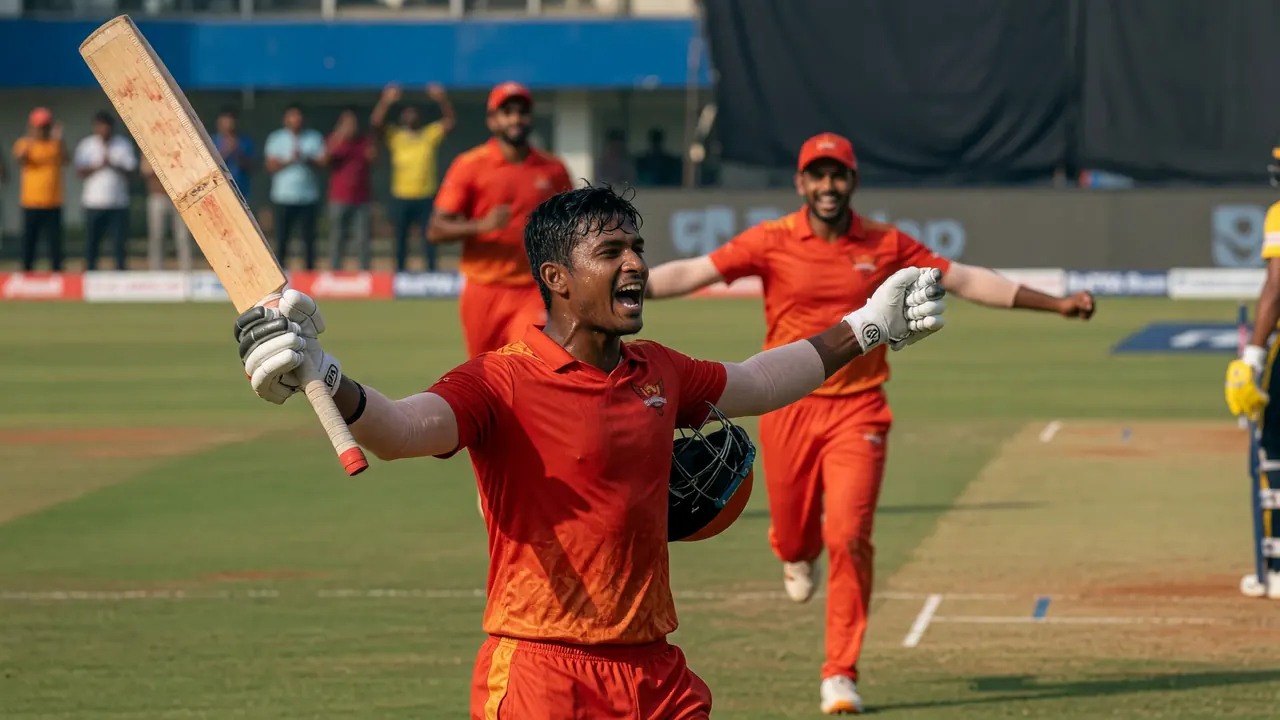
Saikia’s response was to refuse the panic shot. He reached the league’s first fifty in 42 balls, then kept the strike rotating while Amlan Jyoti Das took the more aggressive role in a 39-run stand. Das’s 34 off 22 shifted the asking rate without forcing Saikia to abandon the method that had kept him in. When Das fell, Mayukh Hazarika arrived with a short, violent cameo: 17 not out off eight balls, including two sixes, in an unbroken late stand with Saikia that finished the match five balls early.
The shape of the chase matters as much as the headline figure. Charaideo did not win because the target was soft. They won because one batter absorbed the middle-over pressure while two partners provided the only bursts the innings needed. On a night when five wickets fell in the first 14 overs of the chase, that division of labour was the difference between a four-wicket win and a scramble that never quite arrived.
What the opening night tells the rest of the APL field
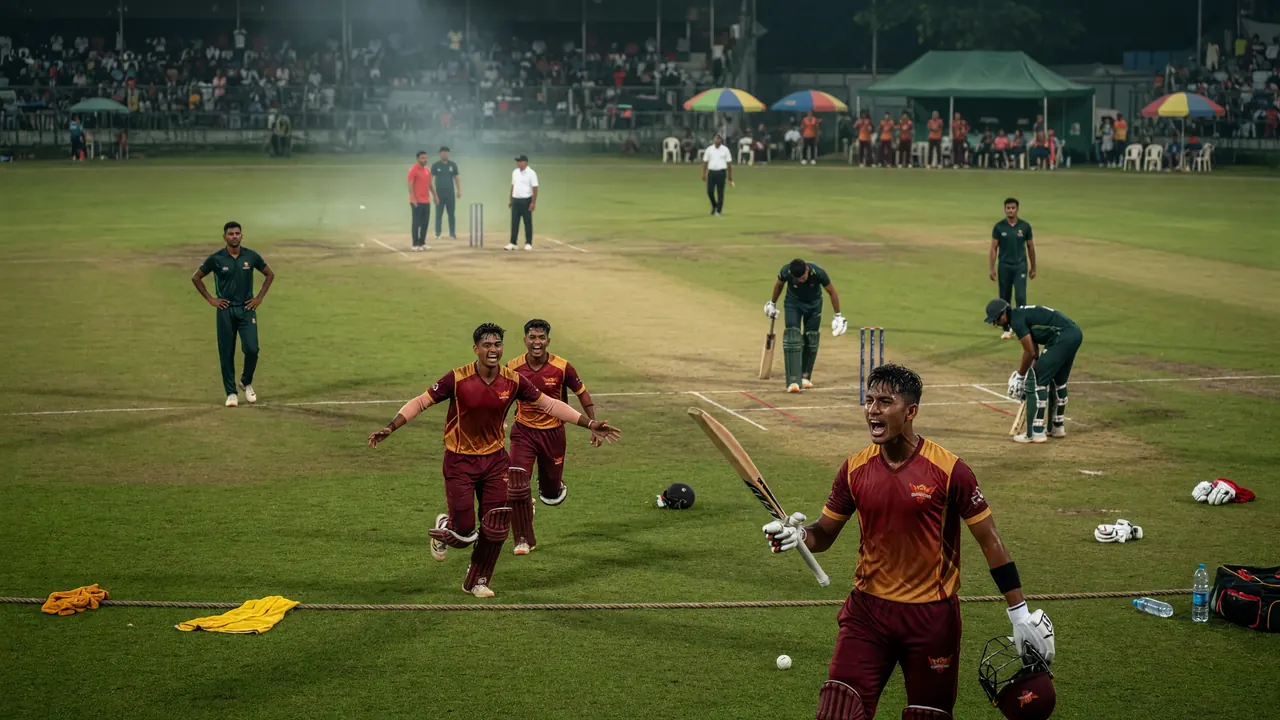
An inaugural league match always carries more freight than a mid-table fixture. For Assam’s new T20 competition, the Guwahati opener set two early markers. First, 156 was chaseable when the batting side kept one set batter through the collapse. Second, lower-order hitting decided the result more cleanly than the powerplay. Barpeta’s late 50-run unbroken stand with Sonar and Bikiran Das, and Charaideo’s closing work from Das and Hazarika, both arrived after the recognised top order had already taken damage.
Saikia’s fifty also gives the league an immediate individual reference point. League organisers and broadcasters tend to lean on the first landmark innings when they introduce a new competition to a wider audience. An unbeaten 68 that actually closes a tight chase is a cleaner narrative than a high-scoring dead rubber, and it arrives on opening night rather than three weeks in.
Barpeta will look at the same scorecard with a different emphasis. The early 42 for three remains the soft point. Dihingia’s counter and Maurya’s rebuild were real contributions, and Sonar’s finish gave them a total they could defend on another night. The bowling plan in the chase was not empty: five separate wicket-takers kept Charaideo honest until the 15th over. The gap was the final six overs, when Saikia finally found partners who could clear the infield.
Reading the individual matchups
Himanshu Saraswat’s double strike in the first innings is the bowling performance most likely to travel into the next round of team talks. Removing Dihingia and the Barpeta captain inside the same short window forced a rebuild that cost Barpeta scoring options later. Maurya’s dual contribution — 43 with the bat and 1 for 8 with the ball — made him Barpeta’s most complete individual on the night, even in defeat.
For Charaideo, the supporting cast around Saikia will draw as much internal attention as the headline innings. Amlan Jyoti Das’s 34 off 22 was the over-rate reset the chase required. Hazarika’s eight-ball cameo was the finishing blow. Without either, Saikia’s 68 would have been a fighting knock in a losing cause rather than the spine of a win. That is the practical lesson for both dressing rooms: set batters still need a finisher who can clear the rope when the asking rate sits above 13.
Venue and competition context
The Assam Cricket Association Stadium in Guwahati hosted the first ball of the Imperial Blue Packaged Drinking Water Assam Premier League. The competition is new; the venue is not. Domestic T20 cricket at this ground has long rewarded sides that manage the middle overs and keep one batter deep into the death. Saturday’s result followed that pattern more closely than it rewrote it.
Charaideo’s decision to bowl first paid off, but not because Barpeta collapsed outright. The early wickets helped; the chase still required 81 from the last six and a composed answer from the top of the order. Captains in the remaining group fixtures will note both halves of that sentence. Bowling first is only an advantage if the batting unit can absorb a middle-order wobble once the target is known.
Scoreboard detail worth keeping
Several numbers from the Guwahati opener will travel into the next selection meetings. Saikia’s 68 not out from 46 balls at a strike rate just under 148 was built on five fours and three sixes, not a single barrage. Dihingia’s 28 off 22 and Sonar’s 37 off 19 show Barpeta can clear the rope when set. Maurya’s 43 off 31 remains the best all-round individual line of the match when his 1 for 8 is added. Saraswat’s 2 for 25 was the only multi-wicket spell, and it arrived early enough to force the rebuild that defined Barpeta’s innings.
The chase equation after 14 overs — 81 needed from 36 balls with five wickets down — is the number coaches will study more carefully than the final margin. Charaideo still had batting depth, but depth only helps if someone is set at the other end. Saikia was set. Das and Hazarika used that platform. Without the unbroken late stands, the same required rate would have looked steeper against a side that had already taken five wickets through five different bowlers.
What comes next
Both sides now carry an opening-night data point into the rest of the APL group stage. Charaideo leave Guwahati with two points and a template: protect Saikia’s start, find one middle-order accelerator, and keep a finisher for the final three overs. Barpeta leave with a competitive total, a proven death hitter in Sonar, and a clear repair job on the powerplay batting that slipped to 42 for three.
The next fixtures will test whether Saturday’s patterns hold. If Guwahati continues to offer a true surface with value for clean timing in the last five overs, totals around 155–165 will remain chaseable for sides that keep one batter deep. If the ball grips more as the tournament wears on, Barpeta’s multi-bowler wicket share becomes a more transferable plan than Charaideo’s reliance on a single long innings. Neither conclusion is locked after one match; both are now live questions for the rest of the group stage.
Further APL 2026 match reports, squad notes and venue briefs continue through the cricket blog and analysis desk as the league moves beyond its opening fixture.