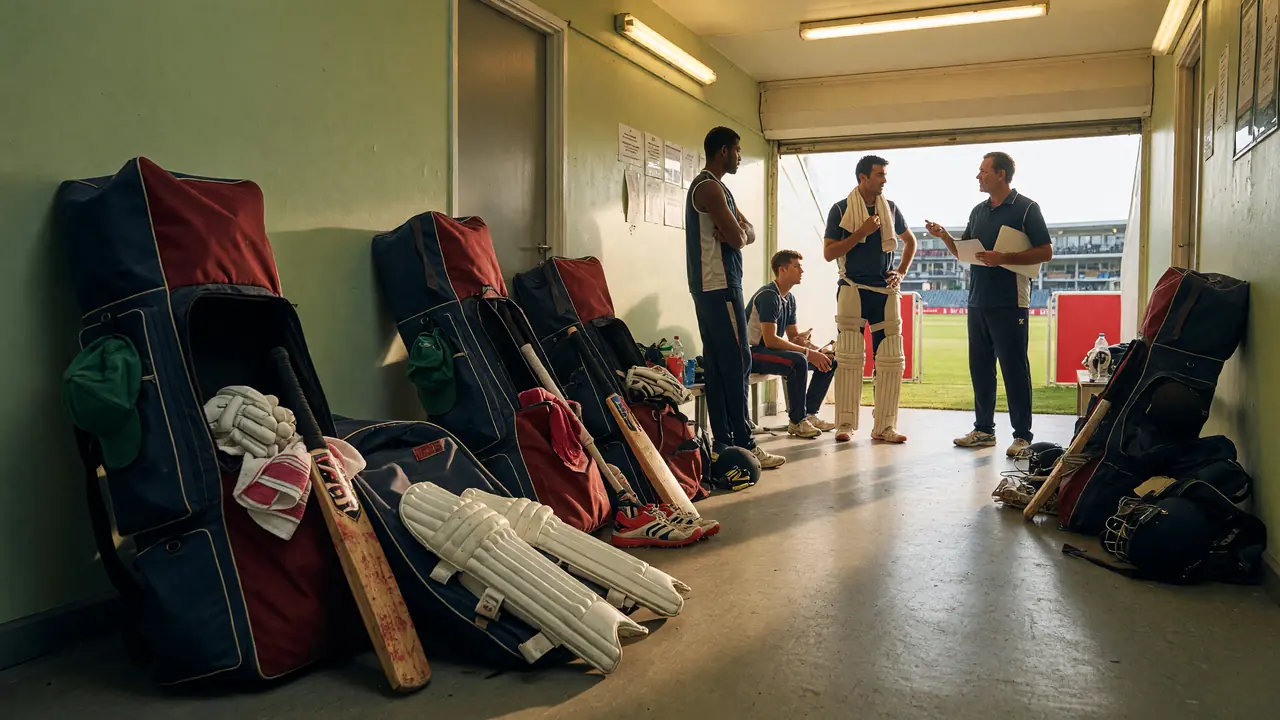
India’s white-ball selectors have handed Shreyas Iyer a clearly rotated T20I squad for the three-match trip to Zimbabwe, with Tilak Varma named vice-captain and Sanju Samson rested. The group is built for a short Harare stay rather than a locked World Cup core, and the first opportunity to use it arrives at Harare Sports Club on Thursday 23 July 2026.
One change was forced before the side even settled into camp. Ravi Bishnoi was confirmed as the replacement for Varun Chakaravarthy after a hamstring injury from the England tour ruled Chakaravarthy out. Around that swap sit two maiden call-ups — Yash Thakur and Ashok Sharma — plus returns for Rinku Singh and Mayank Yadav.
The context for the selection is blunt. India have not won a T20I since lifting the T20 World Cup in March. Six consecutive defeats followed, including a 2–0 series loss to Ireland and a 4–0 reverse in England. Iyer has led through both bilateral series since taking charge; this Zimbabwe leg is the next ledger entry rather than a ceremonial tour.
The full India group
Named squad: Shreyas Iyer (captain), Tilak Varma (vice-captain), Vaibhav Sooryavanshi, Abhishek Sharma, Ishan Kishan (wk), Prabhsimran Singh (wk), Shivam Dube, Suryansh Shedge, Rinku Singh, Harsh Dubey, Ravi Bishnoi, Prince Yadav, Yash Thakur, Ashok Sharma, Mayank Yadav.
That list is not a soft refresh. Sooryavanshi returns after being left out of the final England T20I. Kishan and Prabhsimran share the keeping roles, which keeps batting depth high if India want a second glove option. Abhishek Sharma, Dube, Shedge and Rinku cover middle-order hitting and finishing lanes. Harsh Dubey adds spin-bowling all-round balance beside Bishnoi’s leg-spin.
Pace depth runs through Mayank Yadav, Prince Yadav, Thakur and Ashok Sharma. Mayank’s last India appearance came in late 2024; his inclusion is as much about managed workload across three games in four days as about pure speed on a Harare evening surface.
Why Samson’s rest changes the middle order math
Resting Sanju Samson removes a regular top-order keeper-batter and forces a cleaner choice between Kishan and Prabhsimran for the gloves. The side can still field one keeper and load finishers, or keep both glove options in a longer bench conversation across the three matches. Neither path is locked until match day; the named squad only shows the pool, not Thursday’s card.
Rinku Singh’s return is the softest landing for a middle order that has lacked a settled closer through the losing run. Shedge and Dube offer alternate left-right balances. The open question is not whether India have hitters — it is how many of those hitters Iyer wants when the pitch offers grip to wrist-spin after the powerplay.
Tilak Varma’s vice-captaincy underlines continuity in the middle of the batting group. He has been part of the leadership conversation since Iyer took charge, and the dual role keeps a second voice in the ring if India chase under lights in Harare.
Bishnoi’s return and the spin balance
Chakaravarthy’s hamstring injury removed the primary mystery-spin option from the England tour. Bishnoi steps back in as the specialist leg-spinner. Harsh Dubey’s left-arm spin then becomes the second slow option rather than a third afterthought, which matters on surfaces that dry under afternoon sun and then play differently once the floodlights take over.
India do not have to pick both spinners in every XI. The squad structure simply keeps both available. On a slower Harare strip, two spinners plus a part-time option from the batting group is a realistic path; on a greener evening surface, one spinner and an extra seamer is equally available without calling for reinforcements.

Maiden call-ups and the pace queue
Yash Thakur and Ashok Sharma receive their first India call-ups in this group. Debut caps are not automatic; both sit behind the chance that Harare rewards a different change-up at the death or a skiddy new-ball burst if the toss pushes India into bowling first. Prince Yadav and Mayank Yadav remain the more experienced names in the same lane.
Three games in four days, all at one venue, usually rewards early clarity rather than nightly reinvention. Selectors still left room for surface-based tweaks by packing four pure pace options and two specialist spinners. That is a touring bench built for short-series adjustments, not a fixed World Cup template.
Harsh Dubey and Prabhsimran Singh are also waiting on first caps at this level in the format. Their pathways depend on whether India want a second spinner or a second keeper-batter once the first XI is inked, not on reputation alone.
What Zimbabwe’s named side implies for India
Zimbabwe’s 15 under Sikandar Raza keeps a familiar home core: Blessing Muzarabani and Richard Ngarava with the new ball, Brian Bennett, Ryan Burl, Clive Madande and a settled supporting cast that knows Harare Sports Club after a home T20I series against Bangladesh earlier in the month. Raza’s side have not won a bilateral T20I series against India, but they arrive with local knowledge India cannot manufacture on a short hop.
Full Zimbabwe squad: Sikandar Raza (captain), Brian Bennett, Ryan Burl, Ben Curran, Brad Evans, Clive Madande (wk), Tinotenda Maposa, Tadiwanashe Marumani, Wellington Masakadza, Tashinga Musekiwa, Blessing Muzarabani, Dion Myers, Richard Ngarava, Newman Nyamhuri, Milton Shumba.
For India’s batters, the early examination is Muzarabani and Ngarava into the body and across the corridor. For India’s bowlers, Burl’s leg-spin and the left-arm options can arrive as soon as the powerplay ends if the ball grips. Selection debates on the visiting side should be read against that home attack rather than in isolation.
Selection debates worth watching before Thursday
Three choices sit above the rest. First, the powerplay opening pair once Sooryavanshi’s recall is weighed against Abhishek Sharma’s left-hand strike. Second, which keeper bats high enough to free a finishing or bowling slot. Third, how many pure quicks India want when three matches are packed into four days and Mayank Yadav’s workload has to be managed rather than assumed.
None of those choices is confirmed until both captains hand in their cards. Predicted elevens before toss remain drafts. The named squad only settles the pool from which those drafts are drawn.
Series structure keeps the pressure concentrated. All three matches are at Harare Sports Club with 4:30 PM IST starts — Thursday 23 July, Saturday 25 July and Sunday 26 July. Indian viewers have Unite8 Sports on television and FanCode for streaming across the full set. Broadcast homes do not change mid-series; selection can.
How the losing run frames every pick
The six-match drought is not a background detail for this squad sheet. It is the reason the group looks the way it does. A side that has just dropped a World Cup hangover series to Ireland and then gone 0–4 in England cannot pretend the next bilateral is a private trial with no scoreboard. Ranking points moved after those results, a BCCI review followed the slide from the world No. 1 position, and Iyer’s captaincy record since appointment is still two series without a win.
That pressure does not require dramatic language. It simply means every role in the XV will be read against whether India can interrupt the sequence in Harare. Rotation remains real — Samson’s rest and the maiden call-ups prove it — but rotation without a first win only multiplies the questions for the second and third matches of the pocket schedule.
There is also a longer calendar note attached to the year in the broader reporting around this series: ranking points feed pathways that include the Los Angeles 2028 Olympic cycle. Bilateral matches that look quiet on a broadcast grid can still move the table administrators watch between major events. That does not turn every over into a crisis. It does mean a clean or messy scoreline in Zimbabwe is not disposable for either board.
Reading the bench across three nights
Because all three fixtures sit at the same ground, the cost of a failed experiment is lower than on a multi-city tour, and the value of early clarity is higher. If Thursday’s XI works, Saturday can refine rather than reinvent. If Thursday’s XI fails in a specific phase — powerplay wickets, middle-over squeeze, or death hitting — the bench is deep enough to change one lane without dismantling the rest of the side.
That is the practical use of packing four pace options and two specialist spinners into a 15. It is not an invitation to chop the side every night. It is insurance for a surface that can play different under lights than it did at 4:30 PM IST on the previous evening, and for a bowling attack that may need a different change-up once Zimbabwe’s middle order settles against the first look.
Keep the checkpoints narrow when the series starts. Toss and surface feel. Powerplay against Muzarabani and Ngarava. Middle overs once Bishnoi or Dubey enter. Finishing roles for Rinku, Dube or Shedge once the death overs arrive. Those four phases will tell you more about whether the squad construction was sound than any pre-series predicted eleven.
For a fuller match-day briefing on start times and where to watch the opener, the desk’s series coverage sits with the wider cricket news wire as the Harare leg unfolds.
Saturday’s second T20I is the first place to test whether Thursday’s combination was a one-night answer or a template. Until the toss graphic lands, the confirmed facts that matter for planning are the squads both boards have published, the single-venue schedule, and the two stable Indian broadcast homes for the series.